The "Cancel ChatGPT" Movement: Why Uninstalls Surged 295% in a Single Day
The AI industry just witnessed its most dramatic shift in consumer behavior to date. On February 28, 2026, market intelligence data from Sensor Tower revealed a staggering 295% spike in ChatGPT uninstalls within the United States. This wasn't a technical glitch or a lack of interest—it was a calculated protest.
Crushjs
2 min read
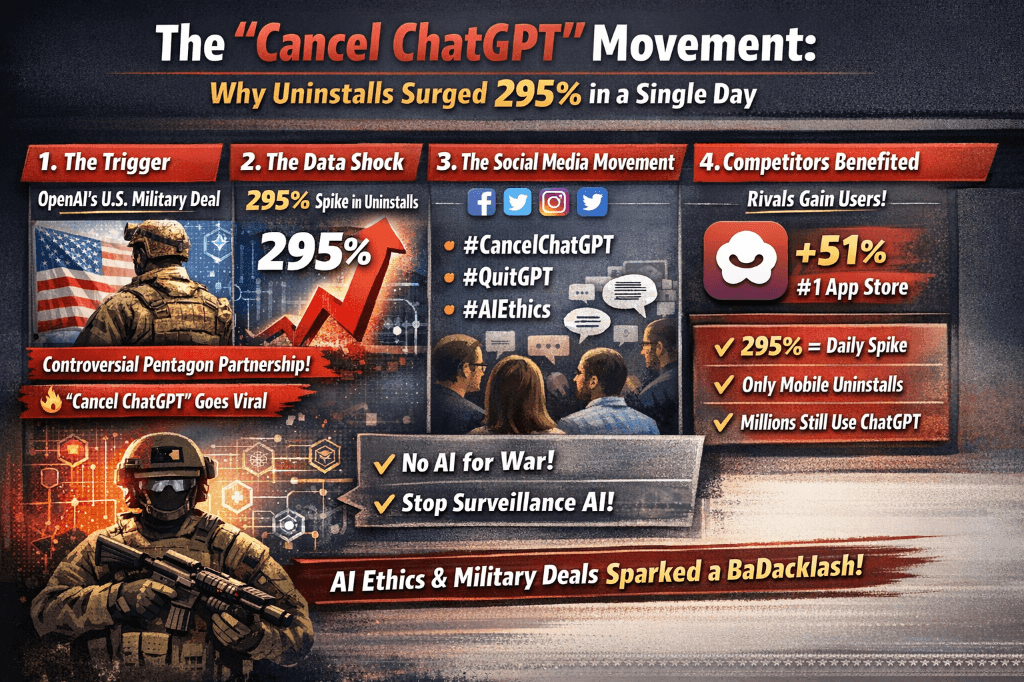
The AI industry just witnessed its most dramatic shift in consumer behavior to date. On February 28, 2026, market intelligence data from Sensor Tower revealed a staggering 295% spike in ChatGPT uninstalls within the United States. This wasn’t a technical glitch or a lack of interest—it was a calculated protest.
In this article, we’ll explore the “Department of War” deal that triggered the backlash, the rise of “Ethical AI” alternatives like Claude, and what this means for the future of OpenAI.
The Deal That Sparked the Fire: OpenAI x Department of War
The exodus began immediately after OpenAI announced a massive partnership with the U.S. Department of War (formerly the Department of Defense). The deal aims to deploy advanced AI models within classified military networks.
While CEO Sam Altman argued that “the people defending the country should have the best tools,” the public response was swift and severe.
Why Users are Switching to Claude
As ChatGPT’s numbers plummeted, its main rival, Anthropic, saw a historic gain. Anthropic’s AI, Claude, climbed to the #1 spot on the US App Store for the first time.
- The Ethical Divide: Anthropic reportedly declined a similar military contract, citing risks regarding domestic surveillance and autonomous weaponry.
- Consumer Sentiment: The data suggests that 2026 is the year “AI Ethics” became a deciding factor for users. Many are no longer choosing the “most powerful” AI, but the one that aligns with their values.
OpenAI’s Damage Control: Was it “Sloppy”?
Sam Altman later admitted that the announcement of the partnership was “rushed” and “looked opportunistic.” In an effort to stop the bleeding, OpenAI updated its contract language to include:
- No Domestic Surveillance: A ban on using the AI to monitor U.S. persons.
- Intelligence Agency Restrictions: Prohibiting agencies like the NSA from using the current models without further oversight.
Conclusion: Is This the End of OpenAI’s Dominance?
While ChatGPT still boasts over 900 million weekly users, a 295% uninstall surge is a massive wake-up call. It proves that even the most dominant tech giants are not immune to the “ethics tax.” As users become more aware of how their data and tools are used, the competition between OpenAI and Anthropic is no longer just about code—it’s about trust.